Not Every Pause Is a Quit: How to Tell the Difference Between Rest and Burnout in Your Hobby Life

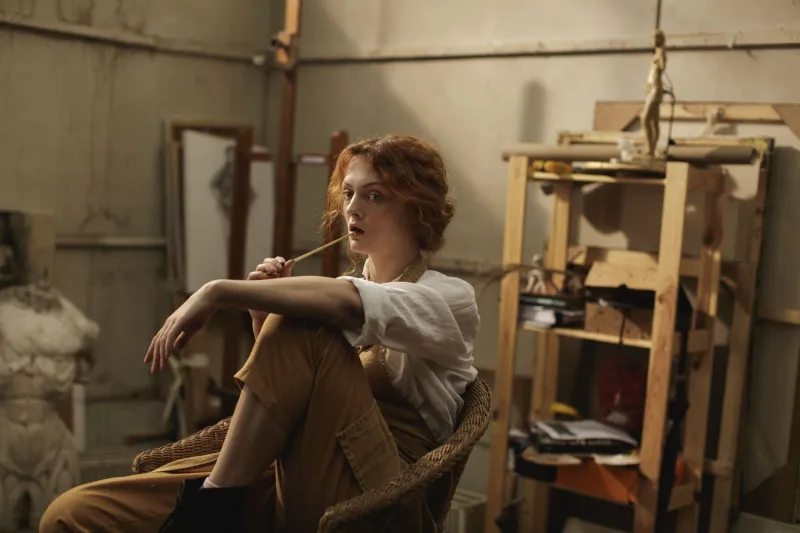
Photo: PattayaPatrol, CC BY-SA 4.0, via Wikimedia Commons
There's a specific kind of guilt that settles in when you haven't touched your hobby in a few weeks. Maybe your sketchbook is gathering dust on the nightstand. Maybe your guitar is leaning against the wall like a quiet accusation. Maybe your hiking boots haven't seen a trail since October.
And somewhere in the back of your head, a voice whispers: If you really loved this, you wouldn't stop.
That voice is wrong. And this article is here to tell you why — and, more importantly, to help you figure out what's actually going on when you step back from the thing you love.
The Productivity Trap Wearing a Hobby Costume
American hustle culture has a sneaky way of infiltrating even the spaces that are supposed to be purely for fun. We've been so thoroughly conditioned to equate consistency with commitment that resting feels like betrayal. You see it everywhere — hobbyist YouTube channels with upload-every-week schedules, Reddit threads shaming people for "only" practicing three times a week, Instagram feeds that make it look like serious enthusiasts never, ever take a day off.
But here's the thing: that pressure isn't coming from the hobby. It's coming from a cultural story we've absorbed about what passion is supposed to look like.
Real passion is allowed to breathe. Real passion can go quiet for a month and come roaring back. The absence of activity is not the absence of love.
Rest vs. Burnout: They Are Not the Same Animal
Before you can figure out what to do, you need to diagnose what's actually happening. Rest and burnout might look similar from the outside — both involve not doing the thing — but they feel completely different on the inside.
Rest is your system asking for a pause. You're not dreading the hobby; you're just tired. Life got busy, a season changed, something else needed your attention. When you imagine eventually getting back to it, there's still a flicker of warmth there. You might even feel a little wistful about not doing it.
Burnout is something deeper. It's when the thought of picking up the hobby creates a kind of low-grade dread. When you do force yourself to engage, it feels hollow or even irritating. The joy isn't just temporarily absent — it feels like it's been replaced by obligation, resentment, or numbness.
Ask yourself honestly: When I picture doing this thing right now, do I feel a quiet "not yet" or a heavy "I don't want to"? That distinction matters enormously.
Different Hobbies Break Down Differently
Not all hobbies put the same demands on you, which means they don't all require the same kind of recovery either.
Creative hobbies — painting, writing, music, fiber arts — tend to drain emotional and cognitive reserves. Burnout here often looks like a blank, stuck feeling rather than physical exhaustion. Recovery usually involves consuming more than creating: reading voraciously, visiting a gallery, listening to albums you love. You're refilling a tank, not resting a muscle.
Competitive hobbies — chess, gaming, martial arts, competitive cycling — burn out through pressure and performance anxiety. The stakes, even self-imposed ones, accumulate. Recovery here often means deliberately removing the score for a while. Play without tracking. Practice without goals. Let the activity exist outside of a leaderboard temporarily.
Social hobbies — tabletop RPGs, team sports, club activities, community crafting — can drain you interpersonally even if the activity itself still appeals. Sometimes what you need isn't a break from the hobby but a break from the group dynamics. Solitary practice of the same skill can be genuinely restorative here.
Solitary hobbies — solo hiking, journaling, model building — sometimes burn out through isolation rather than overuse. The fix can be counterintuitive: bringing someone else in, joining a community, or sharing your work can reignite what felt stale.
A Simple Framework for Figuring Out Where You Are
If you're genuinely unsure whether you're resting or burning out, try this three-question gut check:
-
Does imagining the hobby in a low-pressure context still appeal to you? Not the full commitment version — just a casual, no-stakes version. If yes, you're probably resting. If even the stripped-down version sounds exhausting, burnout is more likely.
-
Are you avoiding the hobby or just not prioritizing it? Avoidance involves a subtle flinch — you think about it and then find something else to do. Not prioritizing it is more neutral; it just hasn't made the list lately.
-
How long has the disengagement been going on, and has it happened before? If this is a familiar cycle that has always resolved itself, trust the pattern. If this feels different — heavier, more final — it might be worth taking that seriously.
When Taking a Break Is Exactly the Right Call
Let's be direct: sometimes the most skilled thing a hobbyist can do is put it down.
If you're going through a major life transition — a move, a loss, a new job, a new baby — your bandwidth is genuinely limited. Forcing hobby time during those periods often makes it feel like a chore rather than a refuge. Giving yourself explicit permission to pause, with the internal understanding that you're not abandoning it, can actually protect your long-term relationship with the hobby.
Same goes for physical hobbies when your body is telling you to stop. Pushing through injury or fatigue isn't dedication — it's a good way to turn something you love into something you associate with pain.
And When You Should Probably Lean In Instead
Here's the flip side: sometimes the resistance you feel isn't a sign to stop — it's the friction that comes right before a breakthrough. Creative people know this phenomenon well. The week before a painting finally clicks, it often feels the most frustrating.
If your disengagement is recent, if it's tied to a specific setback or frustrating session rather than a slow accumulation, and if there's still genuine curiosity underneath the irritation — it might be worth showing up anyway, lightly, without pressure, just to see what happens.
Small, low-stakes re-engagement often works better than a dramatic recommitment. Spend fifteen minutes with it. Don't try to catch up. Just touch the thing.
The Bottom Line
Your hobby doesn't need you to be consistent to prove you care about it. It needs you to come back to it with something left to give. Rest is how you make sure there's something left.
So the next time the guilt voice pipes up because you haven't painted in three weeks or skipped your run for the fifth time in a row — pause before you listen to it. Ask yourself whether you're resting or burning out. They look the same from the outside, but they call for completely different responses.
And either way, a hobby that has survived a break is still your hobby. The pause is part of the story, not the end of it.