Dusting Off Your Passion: A No-Nonsense Guide to Getting Back Into Your Hobby After Life Derailed You

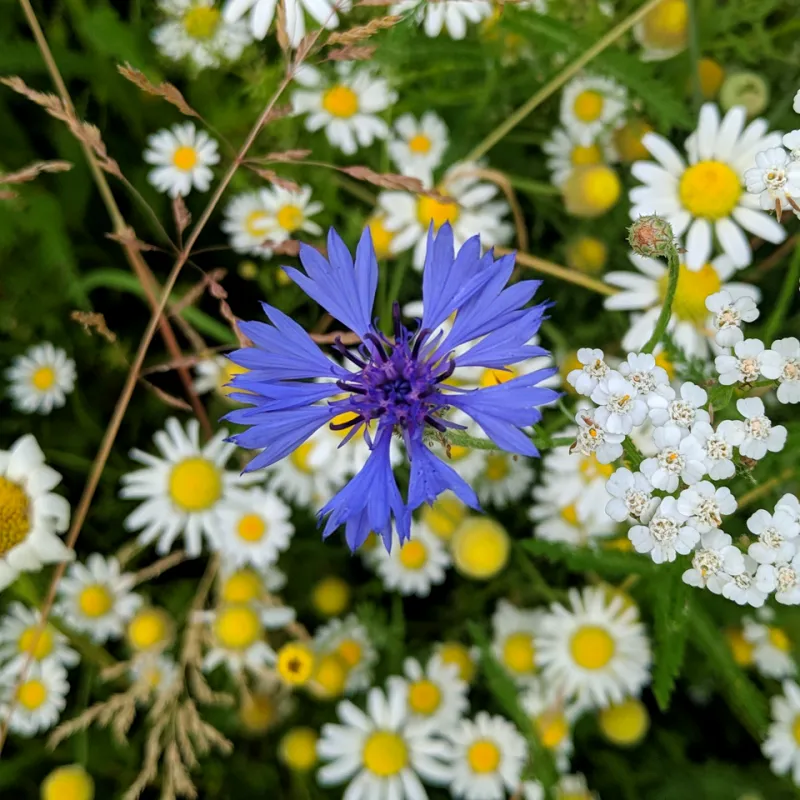
Photo: Irhanz, CC BY-SA 4.0, via Wikimedia Commons
Life Interrupted. Now What?
You used to carve out Tuesday nights for it. Maybe you had a whole corner of the garage dedicated to it, or a group chat that buzzed with updates every other day. Then — somewhere between a job change, a family emergency, or just the slow grind of a really hard season — it quietly disappeared from your life.
And now you miss it. But getting back feels weirdly complicated.
Maybe your gear is buried under three years of clutter. Maybe the community you were part of has moved on without you. Maybe you're not even sure you're the same person who loved that hobby in the first place. All of that is real, and none of it means you're stuck.
This isn't a pep talk. This is a playbook — practical, honest, and designed for adults who don't have unlimited time or energy to spend on a grand comeback narrative.
First, Figure Out What You're Actually Dealing With
Before you buy new supplies or sign back up for a membership, pause for a second. There's a meaningful difference between a hobby that's dormant and one that's genuinely done.
A dormant hobby still gives you a little flutter when you think about it. You scroll past someone else doing it and feel a pang — not just nostalgia, but something more like longing. When you imagine yourself doing it again, there's energy there, even if it's buried under exhaustion.
A finished hobby, on the other hand, tends to feel more like relief when you think about walking away. The memories are warm, but the pull isn't there anymore. And that's okay — hobbies are allowed to have a season.
Be honest with yourself here. Because the strategies for reigniting something dormant are very different from the emotional work of letting something go with gratitude. This article is for the first group — the ones who still want back in.
Lower the Bar. Seriously, Lower It.
One of the biggest obstacles to returning to a hobby isn't logistics — it's perfectionism. You remember what you were capable of before. You had a rhythm, a skill level, maybe even a reputation in your community. Starting over feels like a regression, and that feeling is enough to keep a lot of people permanently on the sidelines.
Here's the reframe: you're not starting over. You're starting again, which is different. Your muscle memory, your taste, your accumulated knowledge — none of that fully disappears. But your stamina and your current skill sharpness? Those will need time.
The practical move is to deliberately scale down your first re-entry sessions. If you used to paint for three hours on a Saturday, try thirty minutes. If you used to run ten miles, go for two. Don't aim to pick up where you left off — aim to remind your brain and body what this feels like. That's the whole job for now.
This isn't lowering your standards permanently. It's protecting your motivation during the most fragile phase of the comeback.
Reconnecting With Your Community (Without the Awkwardness)
If your hobby has a community component — a local club, an online forum, a Discord server, a meetup group — coming back after a long absence can feel socially loaded. You might worry that people noticed you were gone, or that things have changed so much you'll feel like an outsider.
Most of the time? People are genuinely happy to see a familiar face return. Hobby communities tend to be welcoming to returnees because, frankly, most members have had their own gap periods.
A few low-pressure ways to ease back in:
- Lurk before you leap. Spend a week or two reading the forum or scrolling the group feed before posting. Get a feel for what's changed, what's trending, who the new voices are.
- Lead with curiosity, not apology. You don't owe anyone an explanation for where you've been. Instead of opening with "Sorry I've been MIA," try "I've been away for a while and I'm excited to catch up — what have I missed?" It's lighter, and it invites conversation rather than sympathy.
- Find one person to reconnect with directly. A single genuine exchange with someone you used to interact with is worth more than ten public posts. Send a DM, reply to something they shared, ask a real question.
If your old community has dissolved or moved on, this might actually be a good moment to explore new spaces. Pikkari Club exists precisely for this — finding your people in whatever current chapter you're in, not just the one you left behind.
Work With Your New Life, Not Against It
Here's something nobody talks about enough: the life you're returning to your hobby in is probably different from the life you left. Your schedule is different. Your energy levels might be different. Your responsibilities have shifted.
Trying to rebuild your hobby practice on the exact same terms as before is a setup for frustration. Instead, get curious about what fits now.
Ask yourself:
- When do I realistically have 20–30 uninterrupted minutes in a week?
- Is there a format of this hobby that's more portable, lower-commitment, or more compatible with my current constraints?
- What's the smallest possible version of this hobby that would still feel satisfying?
Some hobbies are surprisingly adaptable. A woodworker with a new baby might shift to smaller projects. A long-distance runner dealing with a knee injury might find joy in shorter trail walks. A musician who used to play in a band might rediscover the pleasure of solo practice at 10pm when the house is quiet.
The goal isn't to preserve the hobby exactly as it was. The goal is to keep it alive in whatever form your current life can hold.
Give Yourself a Realistic Timeline
Comebacks take longer than we expect. Not because something is wrong with you, but because rebuilding a habit — especially one with a skill component — requires genuine repetition over time.
Research on habit formation generally suggests that new routines take anywhere from a few weeks to a few months to solidify, depending on complexity. A hobby comeback is essentially habit rebuilding, which means you should expect at least a month of intentional, consistent effort before it starts to feel natural again.
Mark it on your calendar if that helps. Give yourself a six-week window and commit to showing up — even imperfectly — during that stretch. After six weeks, reassess. By that point, you'll have real data on whether the spark is coming back or whether it's time to explore something new.
The Comeback Is the Point
There's something quietly meaningful about returning to something you love after a hard stretch. It's a small act of reclaiming yourself — proof that the difficult season didn't permanently take something from you.
You don't need a dramatic relaunch. You don't need to announce it or document it or perform it for anyone. You just need to show up, lower the stakes, and let the thing you love remind you why you loved it.
That's the whole playbook. The rest is just showing up.