When Two Hobbies Collide: The Surprising Magic of Mixing Your Passions

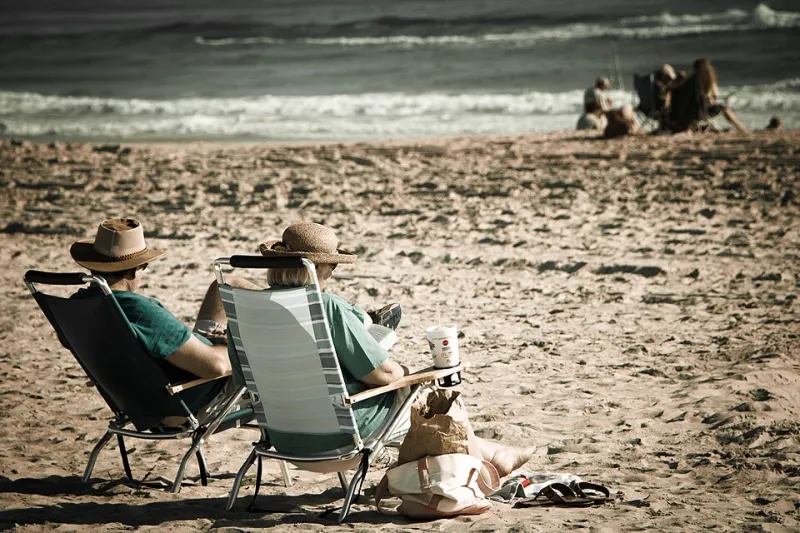
Photo: Maureen Didde from Kansas City, MO, USA, CC BY 2.0, via Wikimedia Commons
You know that feeling. You've been doing your thing — knitting, woodworking, watercolor painting, whatever your jam is — for a solid stretch of time. You're decent at it. Maybe even pretty good. But lately, it feels a little... flat. The excitement that used to pull you to your craft table at 10 PM is harder to find. You're not burned out exactly. You just feel stuck.
Here's something a lot of hobbyists don't consider: the answer might be sitting in the corner of your life you've been treating as a "side thing."
That photography habit you picked up during the pandemic. The sourdough obsession that got a little out of hand. The time you spent learning basic music theory just for fun. These aren't distractions from your main passion — they might actually be the key to unlocking it again.
The Plateau Problem Nobody Talks About Enough
Every hobbyist hits plateaus. It's practically a rite of passage. You grind through the beginner phase, hit your stride, and then one day progress just... stalls. The techniques that used to feel exciting become rote. The projects you finish feel less like achievements and more like checkboxes.
Most advice in this situation is about doubling down — take a class, find a mentor, challenge yourself with harder projects. And sure, that can work. But there's another path that doesn't get nearly enough attention: cross-pollination.
Cross-pollination is what happens when skills, perspectives, or creative instincts from one interest start bleeding into another. It's not about abandoning your main hobby. It's about feeding it from an unexpected source.
Real People, Real Hybrid Hobbies
Take Marcus, a woodworker from Portland, Oregon who'd been building furniture for about six years. He was skilled, no question — dovetail joints, hand-cut mortise and tenon, the works. But he'd gotten bored with his own aesthetic. Everything he made looked competent but predictable.
Then he got into ceramics on a whim after his partner dragged him to a pottery class. Within a few months, he wasn't just making pots — he was studying how ceramic artists think about form, negative space, and surface texture. He started applying those same principles to his woodworking. Suddenly his furniture had a sculptural quality it never had before. The ceramics didn't replace the woodworking. They rewired how he saw it.
Or consider Destiny, a watercolor artist from Atlanta who'd been struggling to push past her ultra-realistic style. She'd always done botanical illustration — beautiful, precise, technically impressive. But she craved something looser and didn't know how to get there. The breakthrough came from an unlikely place: she started taking improv comedy classes with a friend.
Improv taught her to stop second-guessing, to commit to a choice and see where it went. She started applying that same "yes, and" energy to her painting sessions — making bold marks before she had a plan, trusting the process instead of controlling every outcome. Her work opened up completely. She still does botanical illustration, but now there's a spontaneity to it that her audience genuinely notices.
Why This Works (The Non-Obvious Reason)
There's a concept in psychology called "transfer of learning" — the idea that skills and mental models developed in one area can be applied in another. Hobbyists experience this all the time without realizing it.
But there's something even more interesting going on. When you're a beginner at something, your brain is in a fundamentally different mode than when you're an expert. You're more curious, more open, more willing to experiment because you have nothing to protect. You haven't built up the habits and assumptions that can calcify around expertise.
Bringing that beginner's mindset back into your main hobby — even just temporarily — can shake loose some of those calcified assumptions. You start questioning things you stopped questioning years ago. And that's where the magic tends to happen.
How to Actually Do This Intentionally
This doesn't have to be accidental. You can engineer your own crossover effect with a little bit of intention.
Start by identifying what's missing. Is your main hobby feeling too rigid? Too isolated? Too technically focused at the expense of creativity? Naming the gap helps you figure out what kind of secondary interest might fill it.
Look for contrast, not similarity. The most powerful crossovers often come from hobbies that seem unrelated on the surface. A quilter who picks up graphic design. A model train enthusiast who gets into landscape photography. The further the two interests feel from each other, the more surprising — and useful — the overlap tends to be.
Give the secondary hobby real time. A one-time dabble probably won't cut it. You need enough depth in the second interest to actually develop a perspective. A few months of genuine engagement usually does it.
Ask the bridge question. Every so often, sit down and ask yourself: "What am I learning here that I could bring back?" It sounds simple, but most people never make the connection explicit. Writing it down makes it even more powerful.
Don't force a fusion product. This isn't about creating some weird hybrid art form (though hey, if that happens, go with it). It's about letting the influence seep in naturally over time. Pressure kills the process.
The Unexpected Bonus: New Community Connections
Here's a side effect nobody warns you about: when you start mixing your hobbies, you also start mixing your communities. And that can be one of the richest parts of the whole experience.
When Marcus started showing up at ceramics nights in his city, he met artists, designers, and makers he never would have crossed paths with in his usual woodworking circles. Some of those people became collaborators. A few became close friends. One of them connected him with a gallery that ended up showing his furniture.
Hobby communities are incredible resources — full of knowledge, generosity, and perspective. But they can also become echo chambers if you never look outside them. Dipping into a second community doesn't mean leaving your first one. It means expanding your world.
You Don't Have to Choose
There's a weird pressure in hobby culture to pick a lane. To be "a woodworker" or "a painter" or "a knitter" — as if having multiple interests dilutes your identity or commitment. That's nonsense.
The most engaged, most creative hobbyists tend to be the ones who feed their main passion from multiple directions. They read widely, try things outside their comfort zone, and stay genuinely curious about the world beyond their immediate craft.
So if your go-to hobby has been feeling stale lately, maybe the solution isn't to grind harder at it. Maybe it's to go try that other thing you've been curious about — and then watch what happens when the two worlds start talking to each other.
You might be surprised what they have to say.